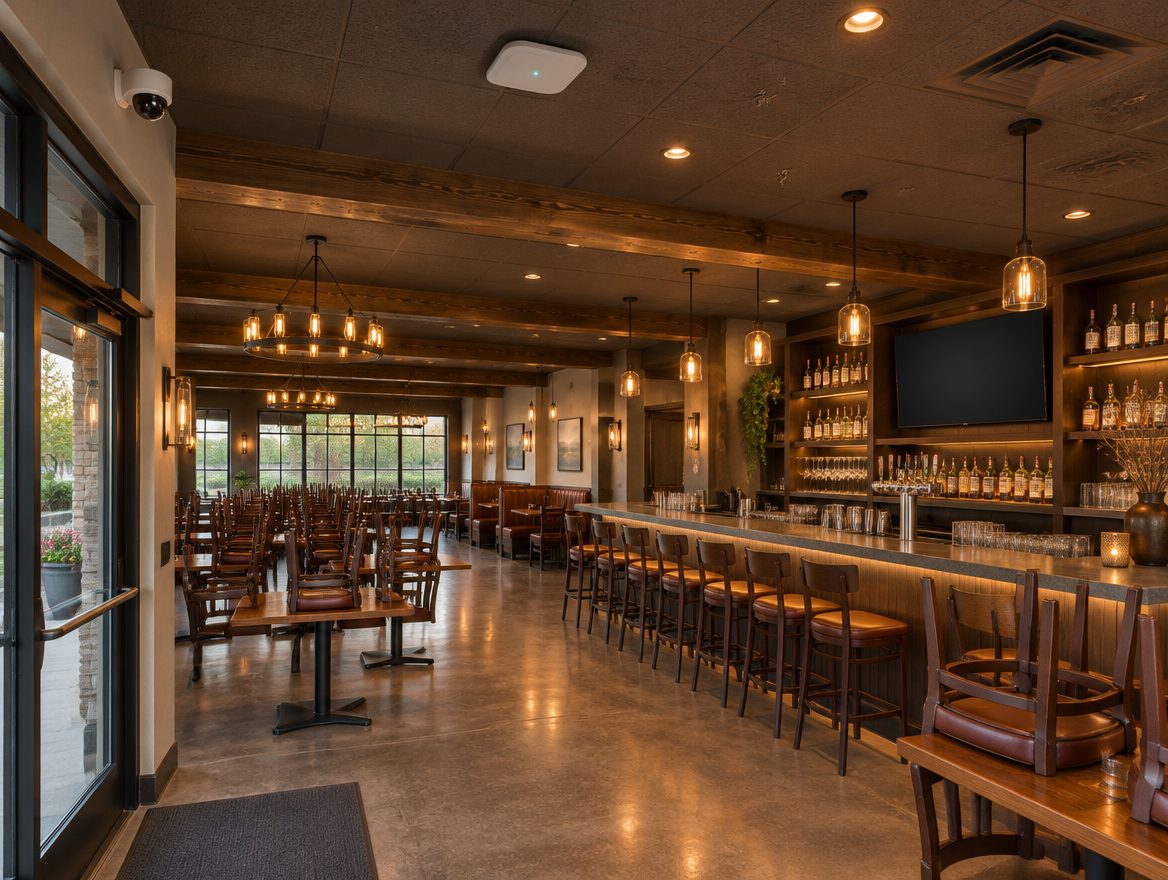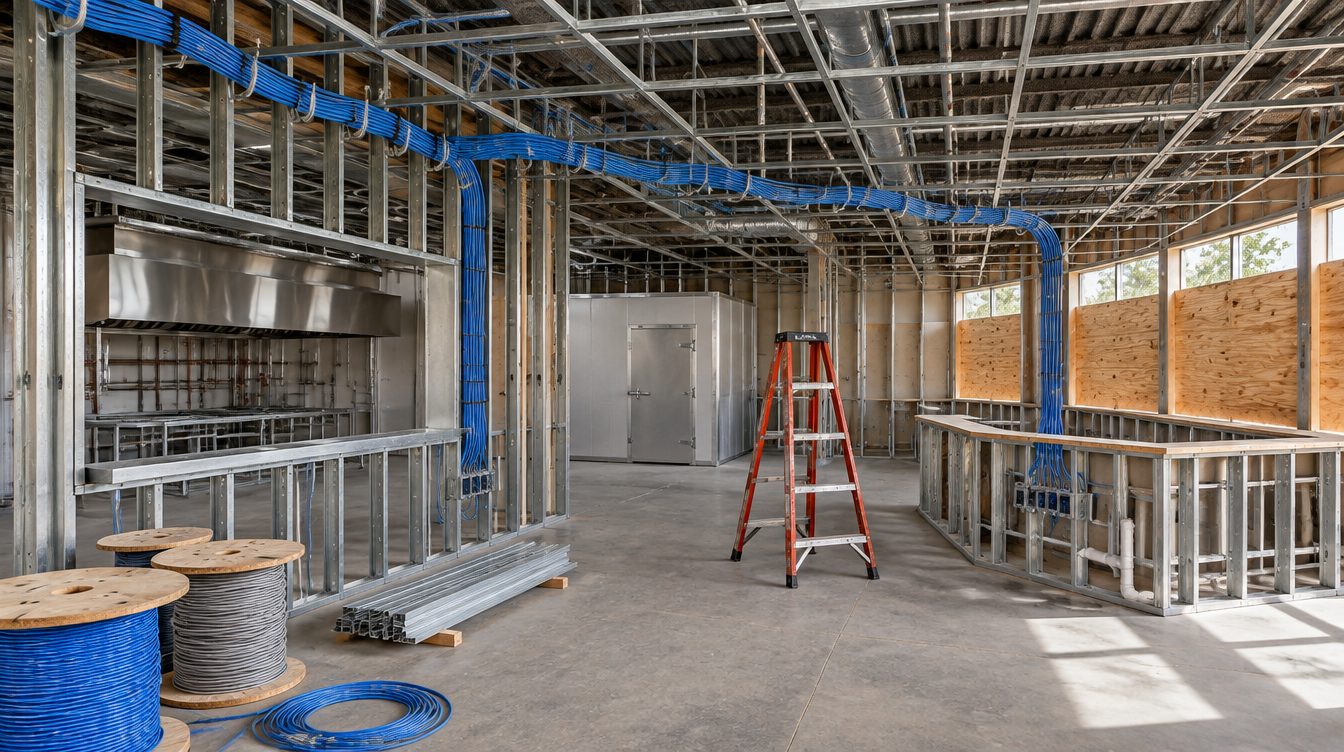
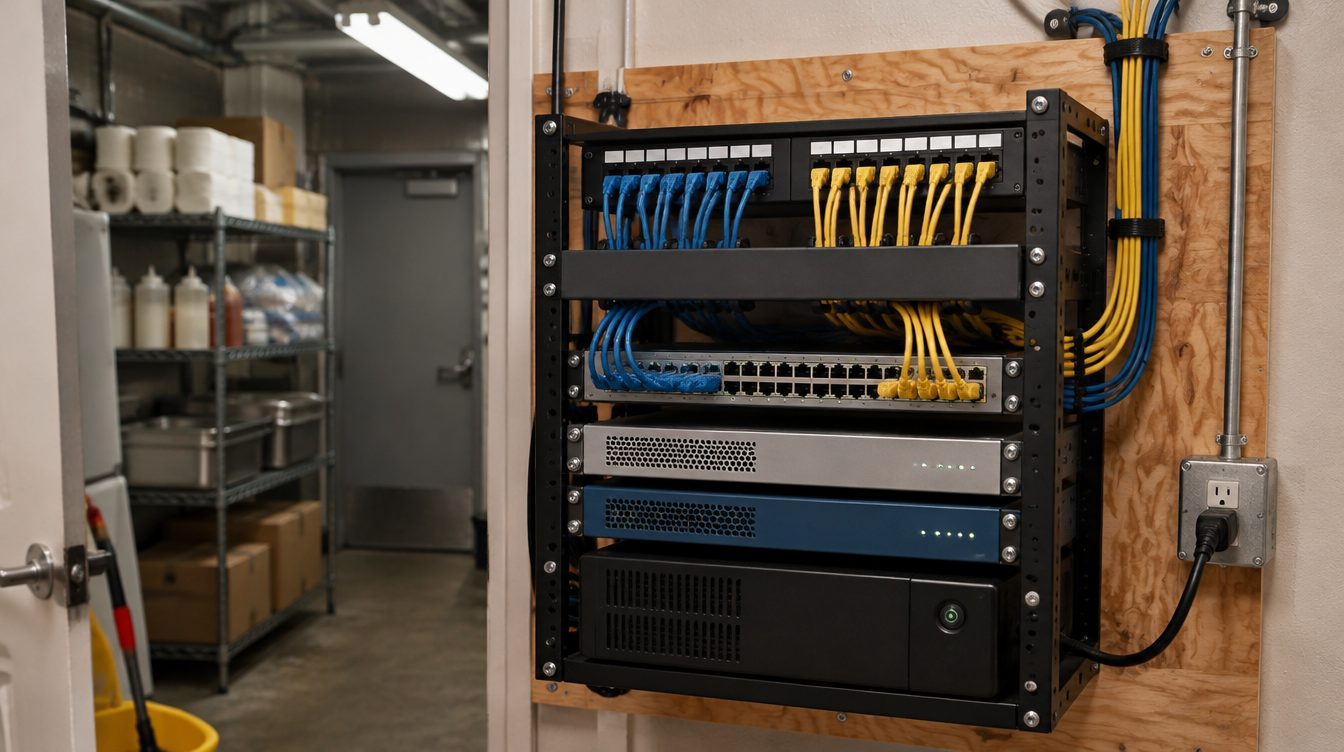
Opening, moving or refitting a New York restaurant? ClearMax technicians put in the cabling, access points, network closet, door readers, cameras and screens as one project, done before the POS company arrives, so install day is spent on terminals and menus instead of missing jacks.
Last updated: November 2026
- 1Mark the floor plan. Host stand, bar, each register, the pass, the back office and the closet, with every drop, access point, reader and camera drawn in.
- 2Run it before the walls close. Cable, door wiring and closet power go in at rough-in, alongside the general contractor.
- 3Hand over a working network. Every run tested, every port labeled, the POS network ready for the vendor's appointment.
Why install day goes wrong
A POS company comes to set up its terminals, printers and kitchen screens. It does not build the network those devices plug into. One vendor's public guide puts it plainly: Toast's site readiness guide says "Toast does not run networking cables." The same guide says Toast will not install if the location is in active construction. Without the drops, the closet and the outlets, the appointment moves.
So cabling and the closet come first, then paint and millwork, then the vendor's devices.
The trades in one restaurant project
- Network cabling and WiFi: a run to every register, receipt and kitchen printer, card reader, kitchen screen and ceiling access point, plus coverage for the dining room, the patio and the kitchen line.
- A separate POS network: payments on their own switch ports or VLAN, away from guest WiFi, staff phones and the office computer.
- Security cameras: the front door, the registers, the bar and the back door, recorded in the closet, with sound off.
- Door readers: the back door, the office and dry storage, chosen to suit the city's egress rules.
- Screens: menu boards over the counter and kitchen screens at the pass.
Which doors get a reader, and which stay as exits
In a dining room the back door and the kitchen exit are exits first and controlled doors second. New York City writes its own building code, and the 2022 edition sets the rule for busy rooms. Section 1010.1.10 of the 2022 NYC Building Code allows no latch or lock other than panic or fire exit hardware on doors serving a Group A room or space with an occupant load of 75 or more, except as the section allows, including electromagnetic locks under Section 1010.1.9.9. Its list also covers an assembly space permitted to be classified as Group B under Section 303.1.2.
That rule decides the hardware. Where a door also needs a reader, the lock is one the panic bar releases, so a guest pushing out in a hurry never meets a locked door. Readers go where the risk is: the office with the safe, the liquor room, and dry storage near the alley.
Menu boards and kitchen screens
A menu board needs power and a data drop behind the bracket before the tile goes up. Kitchen screens at the pass need a wired drop more than WiFi, because a dropped ticket during a rush is a lost table.
The closet, the office computer and the registers
Everything above ends in one small room or cabinet: patch panel, switch, firewall, the camera recorder and a battery that rides through a flicker. It is placed away from heat, grease and the dish area, with its own lock. The back-office computer is set up for scheduling, inventory and email, and every account is opened in the restaurant's name, not the installer's.
After opening, the restaurant can keep the drawings and call for the next project, or add a managed IT plan that watches the network and handles cybersecurity.
Card numbers and New York's breach law
Card data can fall under New York's breach statute. General Business Law 899-aa counts a credit or debit card number, with any required security code, as private information when it is held with personal information and is not encrypted, or the encryption key was also taken. Notice then goes out in the most expedient time possible, and no later than thirty days after the breach is discovered.
Readable switch logs, door logs and camera footage are what let an operator answer the question in days. The site gives no legal advice; what a given restaurant must do is a question for its own counsel.
What New York operators ask before opening
How early should the network be planned?
As soon as the layout is drawn. A drop moved on paper costs nothing; a drop moved after the tile is set means opening a finished wall.
Does the POS company need anything from us?
Usually a finished site, working internet and a drop at every device location by the appointment date. Its own checklist is the list to build to.
What goes into a quote?
The floor plan, the seat count, the opening date and the device list. The price is built from those details, and anything larger is raised before the work is done.